Category Archives: International days

International Day for Disaster Risk Reduction, 13 October 2023

Dimensions of the new disaster-proneness

Humanity is systematically taking apart the living systems that used to make the world relatively safe and predictable. And we have also wrapped the Earth in a blanket of GHG pollution that is trapping the sun’s heat here, mostly in the oceans that shape weather on land. This is a deadly combination, since wrecked ecosystems cannot protect us from storms, droughts and floods, and the hotter ocean is driving more storms, droughts and floods our way. Meanwhile, diseases are spreading in new conditions to new locations, and our crops are being harmed by chaotic and harsh weather. Dry heat-waves kill tens of thousands increasingly often, and moist heat-waves threaten far worse casualties. Fires consume forests and peatlands that have been degraded and dried out, often sweeping into built-up areas and choking us with smoke. The rising ocean pushes salt into our fields and aquifers, and billions live in cities close to the storm-bearing sea, densely packed in poor housing where pandemics can do most harm.

Disaster Risk Reduction Day: origins

The close links between ecosystem damage and disaster vulnerability took a while to be fully recognised. Rather, humanity’s efforts on disaster risk reduction (DRR) started mainly in response to the earthquakes that killed thousands in the 1980s. These struck El Asnam (Algeria, 1980), Irpinia (Italy, 1980), Golbaf (Iran, 1981), Dhamar (Yemen, 1982), Erzurum (Turkey, 1983), Mexico City (México, 1985), San Salvador (El Salvador, 1986), Napo Province (Ecuador, 1987), and Spitak (Soviet Armenia, 1988). Their cumulative effect was to make governments want to improve early warning, preparedness and response capacity. So in 1987, the UN General Assembly resolved to make the 1990s a decade for DRR. Two years later, it also agreed a Framework of Action and designated the second Wednesday in October (later changed to 13 October) as the International Day for DRR.

Yokohama

The 1980s were geologically quiet in Japan, relative to its history of major disasters back at least to the 1293 Kamakura earthquake and tsunami. But Japan was sensitive to the issue and in May 1994 it hosted the World Conference on Natural Disaster Reduction in the port city of Yokohama. This had been badly hit by the 1923 Great Kantō Earthquake, with over 140,000 fatalities. The conference produced the Yokohama Strategy, which covered all the main topics in DRR: risk assessment, civil preparedness, development planning, capacity building, early warning, inclusive participation, building design, environmental protection, and political leadership. Then in January 1995 an earthquake hit the city of Kobe in Hyōgo Prefecture, killing nearly 6,500 people.

ISDR and Hyōgo

In 2000, the UN adopted the International Strategy for Disaster Reduction (ISDR) to follow the 1990-1999 DRR Decade. Both the decade and the ISDR were influenced by the wave of international agreements on sustainable development and the global environment that had been forged in the 1990s. These included Agenda 21, the Millennium Development Goals and treaties on combating biodiversity loss, climate change and desertification. People were starting to see how environmental change, human drivers of disasters, and poverty and exclusion were all involved in the same complex global system. Revamping the Yokohama Strategy to take account of all this was the agenda for the second World Conference on Disaster Reduction in January 2005. This was again hosted by Japan, at Kobe in Hyōgo. The result was the Hyogo Framework, which sought to fix gaps in the coverage of issues of governance, specific risks and early warning, education and knowledge sharing, underlying risk factors (such as ecosystem health and climate change), and disaster preparedness.

Sendai

By March 2015 it was traditional that Japan would host the World Conference on Disaster Risk Reduction in a city with relevant experience. Sendai in Miyagi Prefecture was chosen, which was where nearly 20,000 people had died in the 2011 Great Sendai (or Tōhoku) Earthquake. The tsunami that followed also wrecked the Fukushima Daiichi nuclear complex, causing massive leakage of radioactive material. The conference adopted the Sendai Framework, which sought to strengthen the Hyōgo Framework in addressing underlying disaster risk factors, building disaster resilience at all levels, and mobilising investment. An important factor was that climate change was now seen as a key driver of disaster risk, so the new framework put its hope into the work of the UNFCCC and the 2015 Paris Agreement on Climate Change. It sought to complement them by addressing disasters whether small or large, frequent or infrequent, sudden or slow, natural or man-made, and also by working on related environmental, technological and biological hazards and risks.

DRR Day themes

Each DRR Day has a theme to focus the hive-mind on an aspect of reducing disaster risk. That of DRR Day 2022 was early warning and early action for all. This was inspired by the Sendai Framework’s goal to roll out multi-hazard early warning systems (EWS) for many more areas and people. And early warning is important. Not only does 24 hours’ notice reduce the average cost of disasters by 30%, but EWS installed since the first DRR Day in 1990 have saved tens of thousands of people. Worldwide disaster deaths fell annually from 50,000 or more in the 1970s and 1980s to below 20,000 in the 2000s and 2010s, and halved again in 2020 and 2021. But as climate chaos builds alongside human numbers, the poor continue to fall through the cracks in protective arrangements. So DRR Day 2023 has as its theme fighting inequality for a resilient future. Here the focus is on another Sendai Framework concern: that poverty, inequality and discrimination are causes and consequences of growing disaster risk. The aim is promote greater investment in resilience-building among the poor and excluded, to reduce their exposure and vulnerability to harm.

Meanwhile, at the grass-roots

The way things are going, the UN estimates that soon there will be a major disaster somewhere every couple of days. Poor communities are often hurt most, because they tend to live in crowded, badly-built housing, or on land that is fragile, steep, flood-prone and at greater risk. Most disaster-related deaths occur in developing countries, and do most damage to their relatively fragile economies. In practical terms, emergency aid can take days to arrive, so it’s vital for people to be prepared. In practice, the most effective life-saving efforts are usually made by the people themselves, during and immediately after disasters, and both the UN and EU have programmes to help people prepare for and respond to disasters.

Making communities stronger: APELL and DIPECHO

The UN’s version is APELL, originally developed in response to the 1984 industrial disaster in Bhopal. It was later adapted to natural disasters, to build the capacity of local emergency services to cope before, during and after disasters, and to raise community awareness of risks and what they can do about them. The EU’s version is DIPECHO, launched in 1996 to help vulnerable communities in developing countries strengthen themselves. Its main goal is to ensure that disaster reduction measures are fused with wider national policies, for example on education, building codes and health.

Making communities stronger: anywhere and everywhere

In my book Surviving Climate Chaos, I describe how two small urban communities, in England and Scotland, each turned themselves from a scattering of strangers into a group that was capable of discussing risks and opportunities, acting collectively to protect and advance its own interests, and sharing information about its own capabilities. All it would take for either network to become a local climate change adaptation and disaster preparedness group would be to do some APELL or DIPECHO training. Communities that have increased their connectivity in this way, and have a record of who lives where, who does what, who needs what, and who can contribute what, are likely to cope much better than others during and immediately after disasters. And these simple arrangements work equally well anywhere and everywhere.

A long march in lengthening shadows

Our increasing disaster-proneness is driven and made harder to manage by a human failure to regulate our relationship with nature. Many people and organisations are at work to restore peace with nature and build a more viable future for life on Earth. Starting with the DRR Decade, Yokohama, ISDR, Hyogo and Sendai all helped the world to grow together, to learn and improve the baseline of good practice, and to raise expectations on leaders and of peoples. But the dynamic of climate change means that disasters will keep on coming. Increasing numbers of people will need to be helped, and enabled to help themselves and each other. A global commitment to reducing disaster risk is the least that caring governments can do, while efforts to solve root causes continue. That commitment is still there, people know it, and we are steadily getting better at it. But we cannot afford to forget that we are in a race against the climate and nature emergency, one that we must not lose and in which every community on Earth is an important actor.

© Julian Caldecott 2023
Urban October, 2023

Urban October: origins

The early 1970s are when true modernity began. The post-war economic boom had created new conditions, civilian Earth surveillance and communication satellites were up and running, climate change and mass extinction were coming into view, and humanity was migrating to cities. Many key environment and development indicators and institutions tell their stories from then. In 1975 the new UN Environment Programme was tasked with midwifing an urban-specialised body which later became UN-Habitat. A decade afterwards, UN-Habitat was given World Habitat Day (WHD) at the start of October to mark its concerns. And a decade after that it was given World Cities Day (WCD) at the end of October to mark its progress. The month of urban focus in between became known as Urban October.

Urban October: purpose

The aim of Urban October is to encourage everyone to think about the viability and liveability of our towns and cities, and how they do or do not, or can, or should meet the needs of all their inhabitants, sustainably, inclusively, and without imposing harm on people elsewhere. Urban October also reminds us that we are all stakeholders in adapting our cities and towns to meet the needs of everyone, both now and in the future. And this calls for informed participation in decisions about cities’ needs, ecological footprints, vulnerabilities, and systems of governance.

We are becoming an urban species

More than half of all people now live in cities and towns – our new habitats – and this proportion may reach two-thirds by 2050 as small cities grow in developing countries. We gather in cities to benefit from their density of people, jobs and opportunities to interact with others. A result is that cities are potent and influential aggregations of infrastructure and industry, as well as human and financial capital. But with concentrated populations that depend on imported ecosystem products like food and clean water, and on past assumptions of environmental security, they are also increasingly vulnerable in a changing world.

Cities are on the front line of global heating

Many cities are already facing the effects of climate change, including heat-waves, water stress, flooding, storm damage, and new diseases, all on top of the health effects of urban lifestyles, poverty and poor nutrition. And the vast majority of urban areas are coastal, putting them at particular risk from rising sea levels and storms powered by the ever-greater heat content of the oceans. Ironically, cities also produce 70% or more of the world’s GHG emissions, especially from the transport, buildings, energy, and waste management sectors. But the future of the living world depends on quickly reducing the concentration of GHGs in the air. This calls for rapid net emission cuts by major emitters (like cities), accountability to vulnerable electorates (like city dwellers), and leadership supported by access to key sources of knowledge (like urban academia), capital (like urban businesses), and the levers of power (like urban elites).

Urban October: historical themes

Each World Habitat Day, and since 2015 Urban October as a whole, has a distinct focus on a certain aspect of urbanisation and its consequences and implications. The theme of the first WHD, in 1986 and hosted by Nairobi where UN-Habitat is based, was the right to shelter. UN-Habitat returned to this again in 1987 and 1990. Other themes have included planning our urban future (1997, 2001 and 2009), urban safety and liveability (1998 and 2010), women in urban governance (2000), water and sanitation (2003), and climate change (2011). Since 1989, alongside WHD, WCD and Urban October, UN-Habitat has maintained a Scroll of Honour for people, places and initiatives that have made outstanding contributions in areas such as housing, homelessness, post-conflict reconstruction, and improving the quality of urban life.

Urban October: recent themes

The 2022 theme was growing inequality and vulnerability driven by Covid, climate and conflict. The pandemic and multiple conflicts (in Ukraine, Ethiopia, Yemen, Haiti, Myanmar, and elsewhere) had reversed years of progress against poverty, with tens of millions blocked from advancement or thrown back into unemployment and destitution. And the 2023 theme is investment for resilient urban economies. Here the aim is to promote full recovery from the economic shocks of Covid and conflict by boosting economic activity and sharing experience on tackling inflation. Attention will likely soon return to climate change, following the many weather-related disasters recorded globally in 2022 and so far in 2023.

Cities comparing notes

The immeasurable adaptability of our species is increasingly shown through solutions to the special challenges of urban life and the special needs of cities themselves. Because all cities are built by only one species (us), they differ only superficially (in the great scheme of things) and have many major features in common. This allows city administrations to learn from each other, and their ability to do so is greatly enhanced by networks such as United Cities and Local Governments, C40 Cities, and the Global Covenant of Mayors.

Sustainable landscapes with cities in them

Every city needs healthy farm, catchment and wetland ecosystems nearby, for food and water supply, waste management, environmental security, education and recreation. So city administrations should care for upstream and downstream ecosystems, and the people who live in them, as key allies in meeting the needs of their cities. This often requires the careful and ecologically-informed negotiation of landscape-scale agreements between cities and their surrounding ecoregions. And cities are important habitats for many wild species. Rivers often run through them, offering beauty and biodiversity to city-dwellers, while parks and gardens can be constellations of connected ecosystems that sustain an immense diversity of wildlife. Urban ecology is a key part of our heritage and future, where peace with nature can be restored and maintained for the benefit of everyone and everything.

Self-sufficient cities?

As I explain in my book Surviving Climate Chaos, there is no such thing as an entirely self-sufficient city. But a city can be viable as an open system that draws on resources without harming the systems from which they come. This usually means paying a price for imported goods and services that is satisfactory to producers, and also sufficient to pay for the systems concerned to be managed sustainably. Balancing this equation requires skill and knowledge, but can also be made easier if a city minimises its demands for imports, for example:

  • by securing local food supplies from intensive organic horticulture on roof-tops and in private gardens, public parks and community allotments, and from neighbourhood and household hydroponic, aquaculture, microlivestock and invertebrate protein farms;
  • by promoting local water conservation through household and neighbourhood rain harvesting, water purification and water recycling;
  • by using local sources of biogas and fertiliser from household and neighbourhood waste and sewage fermentation, and obtaining and distributing energy through household and neighbourhood biomass, solar, wind and geothermal energy systems;
  • by harnessing personal energies and social behaviour, such as through local currencies for trading time spent in social care, labour commitments and local produce, or through self-organised local networks like residents’ associations; and
  • by re-designing city systems to be much more liveable, efficient and self-sustaining, though public transport, architecture, pedestrianisation, etc., and with the support of locally-accountable self-government with sufficient powers to make a difference.

Future cities?

In a 2085 scenario, my book on water describes a world in which “City administrations had learned to strike long-term deals with catchment dwellers to pay a fair price for catchment services, in return for their help in protecting upstream ecosystems. Cities had learned to collaborate with one another to liberate rivers from industrial canals and dams, so that they and their shadows, and migrating fish, could run free again. They had also learned to collaborate with land owners to encourage organic farming and low-impact use of ecosystems in the catchments. Their citizens, affected by the ideas of ‘water democracy’, quickly became adept at conserving municipal waters, and began insisting that public water companies (the private ones having been repossessed) fix all leaks in their supply systems. [And] they also began to demand that their urban environments become much more porous, with parks and gardens everywhere, all roads made of water-permeable materials, and a water trap on every roof.” Urban October is an opportunity to join those who are seeking outcomes like this.

© Julian Caldecott 2023

International Day of the World’s Indigenous Peoples, 9 August 2023

What are we celebrating?

On this day we express solidarity with indigenous peoples living in about 90 countries around the world. With an estimated 7,000 languages and 5,000 distinct cultures among them, these peoples typically identify themselves as descendants of the original inhabitants of each country. They are usually also culturally distinct from the majority of people there whose ancestors arrived relatively recently. But many indigenous peoples have experienced a history of unfair exclusion, neglect and abuse, largely as a legacy of how explorers, settlers and colonisers, mainly of European origin, entered and took their lands in recent centuries. Yet many have survived and continue to nurture their distinct traditions and ways of understanding the world.

Why are we celebrating?

Each indigenous people holds a store of traditional social and ecological knowledge, ranging from techniques of survival to insights that could help resolve the deepest dilemmas of modern life. Among their thousands of distinct cultures are many unique perspectives on nature and humanity’s place in it. The more indigenous thinking engages with the mainstream, the greater the spectrum of solutions available to help resolve local, national and global problems. Indigenous peoples’ day 2023 is focused on the current generation of indigenous youth as a particularly energetic source of such solutions.

Deep background 1: people create cultures.

How humanity came to be divided into ‘indigenous’ and ‘non-indigenous’ people is a complex story. It starts with the fact that, as a species, our main claim to fame is that we can’t help being creative. We’re always making bits of culture, including languages, arts, tools, stories, beliefs, and new ways of describing, thinking, or doing things. We create small ones by ourselves, and larger ones with others, often by joining up what we and others are doing. All these fragments interact, making each other more or less likely to persist, produce others, or be forgotten. They include all the rules that keep bundles of culture going long enough for us to grow up with them and consider them normal. This is where our feeling of belonging to a distinct people comes from. For humanity as a whole, the result is a turbulent cultural ocean, with islands of stability representing peoples, each thinking of themselves as the people.

Deep background 2: people used to be very settled.

Before the European onslaught starting about 600 years ago, most of the world was occupied by thousands of different peoples. Each one had adapted to its own ecological circumstances, had its own culture, and had some kind of settled arrangement with its neighbours. Not always peaceful, but always organic and with each people knowing themselves to be unique and rooted in their own place, while accepting that other peoples saw themselves in the same ways. There were no orders from above because there was no above. Each people was the centre of its own world, living in the land by its own laws. Sometimes they shared with their neighbours a way to explain all this, like the Dreamtime of Aboriginal Australia, but sometimes they did not.

Deep background 3: people can make trouble.

Even settled people sometimes have to move, or some of them decide they want to, for various reasons ranging from environmental events to prophetic dreams. If the time is right then leaders emerge and people will follow. Having moved, they arrive elsewhere with little reliable knowledge of how to live there, and resident people (if any) may resist the invasion. Either way, the newcomers disrupt local systems: easy wild prey animals are massacred, new species of crops and livestock are introduced, and native vegetation is cleared. But after a generation or two, what were the new arrivals settle down and start thinking of themselves as indigenous again, with their own local laws, traditions and ways of life. This was the pattern as we became human over hundreds of millenia, and it was the same pattern while we occupied most of the world over the tens of millennia since then.

The European onslaught.

By the 15th century, what had once been the indigenous peoples of Europe had already been hammered by invasions, plagues, empires, genocides, and the intrusion of new ideas over several millennia. Throughly mixed up, and newly-energised by the reconquest of Iberia from Islam, they created ideas and technologies that allowed them to see the whole world as a discoverable and exploitable frontier. The Age of Discovery began, gently at first with Portuguese trade, but then more aggressively with Spanish advances in the New World. This set a pattern that impelled other European peoples to go everywhere to steal anything that they liked the look of from the locals. It became rational to distinguish between ‘European’ people, including all those raised in their ways, and ‘indigenous’ people who were so often their prey or coerced labourers, or (later) the second-class citizens of their empires and states.

Genocide, ethnocide, ecocide.

There are few ethical ways to obtain land for free that is already claimed. European colonists in many parts of the Americas had it relatively easy since so many indigenous people quickly died of introduced diseases. But elsewhere, such people could be (and were) declared inhuman, shot, poisoned, enslaved, or else broken militarily and the survivors moved out of the way. Thus lands were freed for new settlements, plantations and mines, creating social calamities across the world. Since the newcomers often had absolutely no idea of how to live sustainably where they now were, ecological calamities were also inevitable. Both kinds of disaster proliferated as the new ways forced themselves into every aspect of life. All this added up to the wholesale destruction of peoples (‘genocide’), ways of life (‘ethnocide’), and ecosystems (‘ecocide’).

New values, new purposes.

Indigenous peoples who managed to survive the European onslaught are now worth more than their weight in gold. Without them and their different ways of thinking, we would have only a limited global culture to guide us, one that is so full of bad habits that it can’t imagine or organise its way out of wrecking the world. As it is, though, we can still respectfully draw on immensely diverse cultural resources owned by indigenous peoples. And the sooner we learn from them how to think like indigenous people again, the better. With their help, we might be able to restore peace with nature – peace with the Great Mother, or Pachamama as many South American indigenous peoples call her. The International Day of the World’s Indigenous Peoples reminds us of that once-in-a-lifetime opportunity, and time is ticking by.

© Julian Caldecott 2023

World Nature Conservation Day, 28 July 2023

Nature, Great Mother: “nothing compares to you.”

In her haunting song of grief and loneliness, the late Sinéad O’Connor summoned with precision and beauty the feelings of wrenching loss. Our hearts are likewise tormented by the ruin of life on Earth: mass extinction of our fellow beings, and destruction of their marvellous home ecosystems. For we now risk a devastating age of loneliness, a fate that we must prevent at all costs. On this day we celebrate our efforts to do so.

A day for the global grass-roots

Of mysterious origin but well-marked in India, World Nature Conservation Day has not yet been adopted into the UN calendar. Rather it is owned by the global grass-roots: those who cherish and wish to protect nature, without reference to officialdom. Their concern and leadership daily become more important, as the fruits of official neglect and unsupervised private opportunism fall into our laps as deadly heat-waves, wildfires, storms, and floods.

Business as usual, when the world is dying, is no help 

Business as usual is ravaging our lives and futures. Millions are giving up hope in the face of what the UN Secretary-General now calls the era of global boiling. But we aren’t yet sure how this will turn out, and can still hope and strive for better outcomes than those we fear. Despair is relieved by knowing that we are on nature’s side, and that nature can help restore our world if she is allowed to. Knowing this, we can act with determination and confidence on her behalf.

Individuals and small groups have surprising power

Some things we can do by ourselves: pledging our loyalty to nature, restoring local ecosystems, talking with others, spreading the word, and keeping the faith. Other things we can only do together, with many hands making light work, and many minds amplifying each other’s influence. Every little helps, often in unexpected ways.

Big irresistible movements can change whole systems

But then there are the big system changes, the constitutional and institutional transformations, which every nature conservationist should be ready to promote. These are what will protect us all against those who would continue to torture and kill nature. We know what these changes need to be, including peace with nature constitutions, anti-ecocide laws, and judges and lawmakers trained in ecology. And we are starting to sense that they are within reach.

We’re all indigenous, and should start thinking like it

Big changes to save us and nature can only come from people feeling awe for nature and respect for the laws of ecology. This is part of what thinking like indigenous people means. But such changes are opposed by the lies of those protecting their own interests against society and nature. Those lies can be neutralised through knowledge, thought, and discussion about what is really going on, and how to undo it. Every lie destroyed in this way is a victory.

Everyone and everywhere is important 

So conserving nature is not just something that happens far away, in tropical rainforests and coral reefs. These ecosystems are vital globally, but everywhere is equally important as a habitat for ourselves and other creatures. The system in which we live is where our own health, safety and joy come from. By saving local nature we become part of the great solution to the great danger of our time. It is this that we acknowledge and celebrate on this day each year.

© Julian Caldecott

World Day to Combat Desertification and Drought, 17 June 2023

The good Earth

Healthy soil ecosystems are rich in organic materials and living organisms. They are so structured that they drain well while retaining moisture. They contain abundant chemicals in the right balance to be useful to life, and few or none that are harmful. They are often dark in colour and a pleasure to smell and break up in the hand. They support natural and farmed ecosystems, and are key to the wellbeing of the biosphere and all its people. Preserving the health of soils has been a vital priority since humanity invented farming. And yet they are now endangered as never before.

Desertification Day

A UN conference in 1992 agreed Agenda 21 on sustainable development, and two new treaties: the CBD to preserve biodiversity, and the UNFCCC to resist climate change. But droughts and famines in Africa were fresh in delegates’ minds, and a treaty to prevent them ever happening again was also begun. This was the UN Convention to Combat Desertification in Those Countries Experiencing Serious Drought and/or Desertification, Particularly in Africa (UNCCD). It was adopted on 17 June 1994, and that date was to be marked as the World Day to Combat Desertification and Drought. This is to remind us where our food comes from, and that we cannot count on it for much longer if we continue to degrade our soils and other ecosystems, as well as our climate. For unlike other causes of food shortages, like market manipulations and wars, desertification strikes at food supply by undermining the health and vitality of soils.

Deserts and desertification

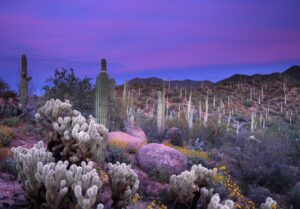
Natural deserts are diverse and fascinating ecosystems (pictured) where life is adapted to fewer than 250 mm of annual rainfall. But desertification is an insidious and unnatural process that destroys plant communities and soils. It can degrade the landscape until it becomes useless to people and everything else that once lived there. The cause is often a combination of over-grazing and poor farming practices to expose the soil, drought to weaken it, and wind to blow it away. But high rainfall can have a similar effect. Once vegetation is removed and roots die, water can wash the soil away to leave sterile sands and rocks that will take nature millions of years to restore. And excessive irrigation can create salty deserts, as water dissolves minerals deep in the soil, draws them to the surface, and leaves them behind when it evaporates.

Saguaro National Park, Arizona

Spreading deserts

People who know too little ecology, or are desperate to grow food or graze livestock, can make deserts anywhere. Ecological ignorance is common among the powerful, and desperation is rising as climate change bites and inequality deepens. So desertification is underway in many areas. Nowhere is entirely safe, but it starts most easily in dry places. Hence it is widespread around natural deserts, such as the Sahel in Africa where the Sahara is advancing southwards. It is also severe in much of Central Asia, western China, the Indian states of Rajasthan and Chhattisgarh, and Mongolia. Other hotspots include the island of Madagascar, and parts of Brazil and Mexico. Moreover, with multi-year droughts in the south-western USA and Australia, farming systems designed for moister times are breaking down and being replaced by deserts.

Flash droughts

Drought is what we call a persistent lack of rainfall, relative to what we consider normal. It dries out soil and vegetation, aggravated by intense sunlight in a cloudless sky. If it continues, water levels fall in rivers and lakes, springs fail, and harsh consequences follow for people and the environment. For example, in the context of an Africa-wide drying trend, seasonal rains have failed for the last six years in the Horn of Africa, bringing widespread food insecurity. Climate change undermines everything we expect of our environment, making our adaptations to past conditions useless. Worse, droughts can no longer be relied upon to be gradual trends with slow consequences, which can at least be prepared for. Rather they have become more sudden and extreme. These new ‘flash droughts’ attack with no warning and rocketing temperatures, and can create desperation for people, livestock and wildlife within weeks.

Reversing desertification

Healthy soils and plant communities can withstand the effects of climate change much more effectively than damaged ones, and can cope with drought much better. So efforts to halt and reverse desertification focus on the protection and restoration of ecosystems, including the recharging of ground waters and the climate-proofing of farmlands. While there are some big flagship projects to halt advancing deserts, such as the Great Green Wall initiative in the Sahel, the general approach is to encourage and enable small-scale farmers to improve the soils in and around their communities. This is done by carefully managing water, crops and trees, and increasing the amount of vegetable material mulched into the soil. These simple techniques, multiplied by millions of participants, can achieve wonders.

Her land, her rights

Where women are most discriminated against, empowering them can unleash enthusiasm, cooperation and effective action on water supplies, small business development, and ecosystem restoration. Local participation and land care are critical to protecting and restoring farm and soil ecosystems, so the focus of Desertification Day 2023 is on women’s land rights and involvement. One aim is to promote laws and policies that end discrimination and secure women’s rights to land and resources. Another is to encourage businesses to invest in women’s equal access to land and other assets needed for ecological farming, land restoration and drought resilience.

The maw of desertification

A looming dust storm is a terrifying sight, with roiling brown clouds towering from the ground to a darkening sun and sky. When it hits, nothing is visible, paint is stripped, fabrics tear, and everything that humans have made is swiftly buried. Climate change can make such things far more common, along with coastal super-storms, choking smoke from forest fires, and torrents of mud, stone and water into our towns and villages. Our efforts to control GHG emissions have been pitifully small so far, with barely more on resisting ecosystem degradation. A new level of commitment is needed to halt the slide of our lovely world into the maw of desertification.

© Julian Caldecott

World Ocean(s) Day, 8 June 2023

Celebrating oceans

The world ocean encompasses all the bights, gulfs, seas, straits, bays, inlets and deep waters of the Atlantic, Pacific, Indian, Arctic and Southern oceans. With 97% of Earth’s 1.4 billion cubic kilometres of water, it covers 71% of our planet’s surface to a mean depth of 3.7 km, but with trenches up to three times deeper. World Ocean Day and World Oceans Day both sprang from the 1992 Earth Summit in Rio de Janeiro, Brazil. On 8 June they focus our attention on the key role of the oceans in the biosphere of our blue planet.

Two days in one

Ocean Day is the more activist version, especially engaging young people and partnerships with aquariums, zoos and museums. In 2022 it involved over 10,000 organisations and businesses in more than 15,000 ocean-themed events in 140 countries. Oceans Day is more official, linked to international treaties on the law of the sea, biodiversity, climate change and desertification. So between them, the two days in one respond to our emotional and intellectual fascination with the world ocean as the dominant feature of the biosphere. And in doing so they focus public concern on the need for governments to cooperate in saving this rich and beautiful living world.

Life in the world ocean

Almost all ocean life is sustained ultimately by the largest photosynthetic mechanism on Earth, the phytoplankton of the top hundred metres or so of sunlit water. This is mixed by currents, the daily vertical migrations of planktonic organisms, and the churning of whales. Its abundance is harvested directly or indirectly by a great diversity of jellies, corals, sponges and sea-fans, amongst many others, and by swarms of finned, tentacled, iridescent and scaled creatures. Once dead, these fall into a seething community of scavengers in the muddy silt of the abyss: brittle-stars, sea spiders, crabs, polychaete worms, nematodes, giant isopods, slime eels and sleeper sharks. And the accumulated nutrients of the sea bed are sometimes lifted back to the shallows by up-wellings that support areas of enormous biological productivity.

Traces of deep history

The oceans cradled life on Earth, and many of its basic designs (phyla) are only found in the sea. From the distribution of these and other marine organisms we can trace the effects of continental drift going back scores of millions of years. Thus there was once a huge equatorial Tethys Ocean, named for the ancient water goddess and consort of Oceanus. It lay between the northern continent of Laurasia (now Eurasia and North America) and the southern continent of Gondwanaland (now South America, Africa, Madagascar, India and Australia). It remained tropical as the continents wandered and collided, but was gradually squeezed by the moving lands. So it ended up as the Coral Triangle, reaching from Malaysia to the Philippines, Papua New Guinea and Indonesia. That region preserves the whole evolutionary record of a long and continuous history, and therefore has more marine species than any other.

The over-fished ocean

People have been harvesting the abundance of sea life since the early days of our lineage. We may even have taken up walking on two legs for wading and foraging in coastal waters. Later we made more and more effective traps and boats, in recent years powering unbreakable fishing nets and steel trawls through delicate and complex marine ecosystems. For all our knowledge of wildlife ecology and sustainable yields on land, where we can see what’s going on, we never really understood how sea-life should be harvested properly. The result is that life in the ocean is now much depleted, and can only really recover where people agree to take the pressure off and let it breed and grow again. These precautionary and no-take agreements are very hard to reach, and meanwhile there are other threats that are even harder to manage.

The polluted ocean

Everything we make and do on land can be picked up and carried by water downstream and into the sea. Run-off includes phosphates and nitrates from farmlands, and sewage from livestock and people. Biologically active, these wastes drive algal blooms that sap the oxygen from sea water, suffocating other life and creating multiplying dead zones. Diverse poisons add to the harm: insecticides from farms, waste chemicals dumped or leaked from industrial plants, and toxins leached from garbage land-fills. We even allow about 11 million tonnes of plastic wastes into the ocean each year, all with their own physical and chemical impacts. And finally, carbon dioxide from almost everything we do is making sea-water steadily more acidic, dissolving the shells and skeletons of marine organisms. As UN Secretary-General António Guterres says, we’ve been using nature and the world ocean like a toilet.

The heating ocean

Far more than air and the land surface, water takes a lot of energy to heat up and it holds that energy for a long time. By absorbing most of the extra heat trapped on Earth by carbon dioxide, methane and other greenhouse gases, the world ocean has protected us against its effects. This let us ignore or deny the underlying problem of global heating for too long, but the days of wilful ignorance are over. Since about 1970 average deep ocean temperatures have been rising, and those of surface waters are now accelerating upwards. And this changes everything: sea level as the ocean expands, the volume and direction of ocean currents, the timing and quantity of rainfall on land, and the frequency and destructive potential of storms that hit the coasts.

Action stations: this is not a drill!

World Ocean(s) Day is now deadly serious. We need to get a grip on sewage, chemical and plastic waste, our destructive treatment of marine ecosystems, and greenhouse gas emissions if we are to navigate this century without global catastrophe. The world ocean is too big and far too powerful to harm with impunity. We know what we should be doing with ever-greater clarity, but taken together our governments and businesses are doing far too little of it. Some are leading, and we should be applauding and rewarding them. Many others are lagging, influenced by polluters and other short-term interests, and we should be pressing them to do better. What hope there is lies with the millions of young people and dynamic institutions who support World Ocean(s) Day, and in the human capacity to restore peace with nature.

© Julian Caldecott

World Environment Day, 5 June 2023

Plastics for all

The first National Plastics Exposition opened its doors in New York City in April 1946. Post-war recovery and a sustained global economic expansion were starting, and people were enthralled by plastics. They were cheap, durable, versatile and convenient, and no one asked or cared if they were also biodegradable. The petroleum with which to make them was abundant, and chemical engineers were highly creative. There seemed no end to the benefits that plastics would bestow on ordinary people. Since then, 10 billion tonnes or so of plastic have been made. Highly resistant to biological degradation, virtually all of that legacy plastic is still with us in the global environment, including inside us.

A new relationship with nature

On World Environment Day we consider issues that are harming the global environment, Earth’s living systems, and human wellbeing. Some have their own special days in the UN calendar, such as threats to biodiversity, wetlands, wildlife, forests, Mother Earth, oceans, and mountains. So on 5 June the focus is on key issues that might otherwise be neglected. One is the fast-growing problem of plastic pollution. How to end it was the focus of an international conference hosted by UNESCO in Paris from 29 May to 2 June 2023, with the aim of negotiating a new treaty by 2024. This is vital because plastics, microplastics and nanoplastics have now penetrated every part of the biosphere. Their effects as pollutants are diverse and dangerous, so plastics now have a key role in defining a new era in humanity’s relationship with nature.

A tsunami of plastic

Total plastic production is now over 400 million tonnes annually, having doubled since 2005 and likely to double again by mid-century. Less than a tenth of total production is recycled, and half of all plastic products are designed to be used only once. Among other things, these account for a million plastic bottes sold every minute worldwide, and five trillion plastic bags used each year. About three-quarters of all plastic is discarded as waste, mostly into land-fill, but nearly 25 million tonnes annually end up in lakes, rivers and seas. Of these, about 11 million tonnes enter the oceans each year, getting tangled up in marine ecosystems or joining one of the great floating garbage patches that are fed by rotating oceanic currents or gyres.

Ruining the view

There are few more depressing sights than rubbish in what would otherwise be a lovely place. Plastic garbage especially, since we know it will never decay naturally and will stand forever as a sign of human grubbiness. Tips spilling down slopes from beauty-spot car parks; skeletons of trapped shrews in old bottles; ragged bags hanging from twigs; bones, feathers and cigarette lighters in sea-bird nests where the chicks should be; yoghurt pots, shopping bags and fishing lines wafting to and fro in coral reefs; spangles of multicoloured fragments in the tissues of jellyfish. Even if plastics were totally harmless to living systems, which they are not, the heart rebels at the carelessness and ugliness of it all.

Microplastics and nanoplastics

Rather than decaying organically, plastics break down into ever-smaller fragments. Microplastic particles, ranging in size from a millionth to five thousandths of a metre (1 μm to 5 mm), move easily in water and air and have been detected in ecosystems and organisms across the world. Globally, the great majority of of drinking water and sea salt samples now contain microplastics, for example, and fragments of polyethylene terephthalate, polyethylene, polystyrene and polypropylene have all been detected in human blood. Far smaller nanoplastic particles (0.001-1 μm) are also out there in vast quantities, and it is known that the smaller they are the more easily they enter plant and animal tissues. But nanoparticles are hard to study and very hard to filter from effluents, such as from recycling facilities where plastics are made into pellets. One modern re-processing facility in the UK, for instance, was found to be releasing hundreds of tonnes of small micro- and nanoplastic particles annually, as they passed straight through the installed filters. The result is that the biosphere is now awash in tiny plastic fragments, all doing unknown but potentially severe harm to everyone and everything.

Feral toxins

The main components of plastics are carbon polymers, but on average they also contain about 6% of additives such as plasticisers, flame retardants, stabilisers and pigments, as well as various processing residues. Over 13,000 chemicals are involved in making plastics, of which barely more than half have been tested for hazardous properties and nearly half of those are dangerous. These are linked to a wide range of acute, chronic and inter-generational toxic effects, including specific organ toxicity, various types of cancer, genetic mutations, reproductive toxicity, developmental toxicity, endocrine disruption and ecotoxicity. Many also persist in the environment, accumulate in food chains, and are able to move to over long distances. Thus plastic garbage poses dangers locally, downstream, and far away, right up to the Arctic where persistent organic pollutants condense in the cold and enter the food chain, all the way up to orcas and polar bears. Few waste recyclers have full information on these hazards, or the technology to manage them, so recycling can release toxins and recycled plastics may even contain concentrated poisons.

A plastic shroud for Mother Earth

Many scientists believe that we have now entered a geological period called the Anthropocene, the ‘new age of humanity’. They expect that one day a layer of rock dated to about 1950 and only a few millimetres deep will exist all over the world. It will be rich in the fragments and residues of agriculture, industry, fire and war, and most obviously plastics. Below this layer will be abundant and diverse fossils, revealing the richness of life in the pre-human biosphere. But for centimetres above it there will be few fossils other than those of chickens, rats and people. It will stand out to future observers in the same way as the thin dark layer, rich in iridium, that marks the Chicxulub meteor strike 66 million years ago. This caused such global devastation that it killed the non-avian dinosaurs, pterosaurs, ichthyosaurs and many other kinds of life. In this sense, humanity’s rise over 11,700 years since the last ice age has been truly meteoric. The plastic stones of the future will surely mark us as the champion litterbugs of planet Earth.

Turning off the plastics tap

UN Member States have now agreed to seek a treaty on ending plastic pollution. Many technical solutions are available to reduce the use of virgin petroleum-based polymers, and allow much more plastic to be recycled safely. Biodegradable alternatives also have a key role. But ensuring uptake of these solutions will be hard, and livelihoods will have to be safeguarded. A system-change approach has been proposed, in which markets for reusable and alternative products, and the business case for recycling, would all be strengthened. More investment would also be needed in collecting and processing legacy plastics. But the costs would be relatively low, especially if the economic benefits of reduced pollution and new business opportunities are considered. Thus there is a viable path to making plastic pollution a thing of the past. To join it, treaty negotiators must find ways to harmonise international action, while building synergies to create major policy shifts and practical changes. And then the hard work of global clean up can begin in earnest.

© Julian Caldecott

International Day for Biological Diversity, 22 May 2023

A moment of global agreement

Biological diversity (or biodiversity) means the variety of living things. It is a term that passed from conservation science into international law through the Convention on Biological Diversity (CBD). This was agreed at a UN conference in Rio in 1992, along with the conventions on climate change and desertification, and entered into legal force on 29 December 1993. Those were the heady days when peoples, experts and governments could agree on the need for urgent action to save nature and the human future. But in the years that followed goals and targets were repeatedly missed, and our global problems kept on getting worse.

A subtle but important idea

Meanwhile the word ‘biodiversity’ never really caught on as a way to promote public understanding. To make it make sense it often had to be translated into stories and pictures about endangered animals, plants and nature reserves. This gave the impression that biodiversity just meant ‘wildlife’. But it is in fact a different, deeper and more subtle idea about the nature of all living systems, which are involved in crises of global heating and climate change, desertification and water stress, and poverty and insecurity. So it’s worth going back to the very beginning to see what ‘biodiversity’ really means.

Immortal life

All living things (or organisms) share a common and continuous ancestry from the start of life on Earth nearly four billion years ago. Life as a whole is thus effectively immortal, even though all individual organisms eventually die. But if they have been able to cope in their own particular environment, they will have reproduced before dying. If so, then their offspring will keep their lineage going for another generation. Uncountable lineages since the beginning have thus struggled to continue, all competing to seed every new instant and environment with their own kind of life.

Diverse life

Under this pressure, the lineages of life spawned a near-infinity of different forms. Each made a living in its own way, and bred almost true until opportunity or necessity changed the rules of its existence. Then new forms arose by natural selection, time after time, rising and falling into extinction as changing environments dictated. All this creativity and intergenerational memory was made possible by complex molecules that stored, copied and passed on the information needed to make each organism in each place and time. These molecules are what we call genes and genetic material, the stuff of heredity and design information in living systems.

The Tree of Life

Now consider the myriad trillions of individual organisms and tens of millions of distinct lineages (or species) at any moment of Earth’s history, all living in intricate relationships with one another. Then you see the complexity and diversity of life on Earth, which we call biodiversity. Add the perspective of billions of years, with each species only lasting a short while before being replaced, and you have the immortal Tree of Life itself. This is a metaphor for something well beyond ordinary human understanding. A Tree rooted in the unimaginably distant past, bearing a shimmering, ever-changing canopy of life forms on the twigs and branches of its many tangled lineages

The Living World

And now add the curved surface of the Earth, oceans and atmosphere within which the Tree grows: the great planetary ecosystem that we call the living world or Biosphere. This unites all the subsystems and environments inhabited by every organism and species that lives on the planet today. These two visions of the Tree of Life and the Biosphere are useful and important, and should be taught from birth in all societies (as they are in some). The idea of the Tree tells us how we as organisms came into being, and that of the Biosphere tells us where and how we live as organisms among many others. The idea of biodiversity is integral to both.

Our divided minds

These concepts help to place us in the Universe. They also give us a context and reason for our existence, both as organisms and as conscious, social beings able to make informed and debated choices. These two aspects of being human are equally true. We have an animal existence shaped by heredity and evolutionary change, as well as individual consciousness shaped by culture and life-experience. But tensions within this double truth yield dilemmas, as well as enormous potential for cooperation and selfishness, which we often call good and evil.

Careless economics

People have recently gained access to fossil energy in the form of coal and petroleum, and combined its use with powerful new technologies. Thus we have built an economic system that has been allowed to operate almost regardless of the rules of ecological sustainability. Dire and dangerous consequences are now rampant: global heating from pollution that traps the Sun’s heat in the Biosphere; ecosystem degradation from over-exploitation and the expansion of settlements, infrastructure, plantations and farmlands; and mass extinction of non-human life forms from direct harm to natural ecosystems and from climate change.

The shedding of leaves

By these means we have blighted the Tree of Life, which is now shedding ‘leaves’ (species), ‘twigs’ (genera) and ‘branches’ (larger and deeper lineages) faster than at any time since the meteor strike that killed the non-avian dinosaurs 65 million years ago. And it is doing so much faster than at any other time in Earth’s history. This loss of biodiversity is rapidly degrading the integrity of the living systems that we depend upon. The blight is also undermining the stability of the oceans, Amazon, Arctic and other major Earth systems. The consequences if they tip into chaos are scarcely imaginable, but on present trends it could happen in this very century. Thus the blight threatens to end our comfort and prosperity, and quite possibly our existence.

A day to remind us …

Which brings us to the International Day for Biological Diversity. This was declared by the United Nations in 1994 to mark the CBD’s coming into force on 29 December. But in 2001 the date was changed to 22 May to avoid the distractions of mid-winter and year-end festivals. Its purpose is to remind us of the need to respect the Tree of Life and the Biosphere, of what we have been doing to them with our careless economic system, and of how we must regulate our behaviour to stay within the bounds of sustainability. In short, of the need to restore harmony with nature before everything tips into chaos.

And a day for celebration and commitment

In 2023, the International Day for Biological Diversity is a reminder of acute danger. But it can also allow for celebration that we are starting to recognise the threat, and to act on it. Many now remember that nature is the most valuable thing we have. We are living more gently within nature, and voting for better and greener governments. Our great task now is to restore ecosystems and peace with nature, and on this day we should think realistically about how to do so. In practice it can mean donating to wildlife trusts and community rewilding initiatives, or participating in actions to protect nature, or helping to build a sense of ecological reality among young and old. All such efforts are welcome, and all are vital for the Tree of Life and Biosphere.

© Julian Caldecott

International Mother Earth Day, 22 April 2023

In debt to our mothers

International Mother Earth Day reminds us of the protection, comfort and education that we owe our own mothers, the mothers of all our ancestors, and the womb-like embrace of nature. But there is an edge to it as well, because although nature is beautiful, creative and generous, she is also powerful, her rules are not negotiable, and they are enforced by terrible sanctions.

Longing, belonging and biophilia

Deeper than the ideas of motherhood, reward and punishment, however, is knowing that we are part of nature and she is part of us. This is why we love fertility and diverse abundance. It is why we like gardens, and why so many people join nature clubs, volunteer for nature charities, and protest when nature is threatened. We sense that harm to nature means harm to us and our children.

Peace with nature as a good marriage

We can only live well when there is harmony between us and nature. But such peace is only possible if we accept that our own interests are not the only things that matter. Then we can join a community of interdependent beings, all with needs and rights that must be met for the whole system to work properly. Thus peace with nature is like a good marriage, one that accepts difference as well as common interest, and is maintained by traditions of respectful reciprocity.

Can we earn a viable future?

This line of thinking is deep-rooted in many indigenous cultures, and in recent years the Plurinational State of Bolivia has been particularly active in promoting it at the United Nations. A series of UN resolutions have sought to rebuild peace with nature by accepting an Earth-centred rather than a human-centred point of view. These ideas are becoming more influential, as the dangers of the global climate and nature emergency become clearer. They are signposts on the path by which humanity can earn a viable future.

The healing powers of ideas and actions

Everyone can help in this. We can all start to show respect for the rights of Mother Earth, simply by choosing to make space for her in our hearts. From there will come interest in learning more about nature, befriending people who share that interest, and becoming aware that even small groups can change the world. Just as a ruined ecosystem can regrow, so a damaged culture can recover through the healing power of informed ideas and community action.

Clean-up time

Many societies are now recovering their confidence in the wisdom of ecology. They include cities on the UN-Habitat Scroll of Honour, countries like Costa Rica that have committed themselves to ‘peace with nature’, those like New Zealand that have embraced the ‘well-being economy’, and those like Ecuador that have written protections for the Rights of Mother Earth into their national constitutions. They also include states, provinces, municipalities, suburbs and innumerable communities that are quietly getting on with ecosystem restoration and clean-up, trusting in nature and voting for people whom they believe will support them.

Change, hope and progress

All share an awareness that sustainable well-being is available only to peoples whose laws and governance arrangements respect the needs and rules of nature. Recognising this direction of travel across humanity, despite many setbacks, we can hope that future Mother Earth Days will be even more celebratory than this one of 2023.

© Julian Caldecott

Earth Day, 22 April 2023

The power of seasonal transitions

There’s something about seasonal transitions which reminds us that we inhabit a living world, even if we often feel insulated from it by concrete, glass and traffic. The northern Spring of 1970 saw a peak of environmental awareness which left behind several permanent markers, like sea-weed on the beach after a storm. Prominent among them was Earth Day on 22 April.

The magnetic influence of 22 April

Earth Day has ever since been a way to drum up public awareness of growing threats to the global environment. Thus the UN chose 22 April 2009 to declare International Mother Earth Day, and 22 April 2016 to open the Paris Agreement on Climate Change for signature by the world’s governments. Since then, climate change has been a major theme as public concern has grown along with scientific understanding of its causes and consequences.

Where are we now?

And so we have reached Earth Day 2023. It would be good to be able to say that we are well on the way to solve our major environmental problems, but we cannot yet do so. Millions have taken to the streets, whether inspired by Greta Thunberg, the Extinction Rebellion, or Earth Day committees. But we are still emitting many billions of tonnes of greenhouse gases each year, a thousand times more than we save. As a result of these and past emissions, heat continues to build in the biosphere, and major Earth systems are wobbling towards their tipping points.

Tipping points in Earth and human systems

We don’t yet know how this will turn out, but just as tipping points in Earth systems can creep up on us unnoticed, so too can those in our societies. Countries can have anti-environmental governments for years, while their peoples become more and more frustrated and fearful, organising themselves in little groups and talking with one another. Then, out of what seems like a blue sky, change comes suddenly and positive energies are released.

In the transition, on the cusp, or just stuck?

But such breakthroughs are occasional events in a broad and diverse trajectory of change. Some places are in mid-transition, with stable majorities that expect their governments to ensure high environmental standards and reduced net carbon emissions. Others are on the cusp, with widepread public support for green policies that are still resisted by those with political power. And yet others are stuck, rejecting climate science as a plot, or lacking awareness of global conditions, or worrying about what seem to be more immediate issues.

The transition that matters

Where does your own place fit on this spectrum? In answering, remember that the transition that matters is not a one-day event. Rather it is a process that involves overlapping lifetimes and myriad conversations, elections, lawsuits and actions that add up to a direction of travel. Particularly in countries with indigenous populations, the respect with which indigenous insights on ecological sustainability are treated can shape the journey.

Changing the Zeitgeist

It is this gathering of energy from all sources within a society that eventually changes the Zeitgeist. If there is no direction of travel, it can be started. If it has started, it can be accelerated and made more inclusive. And if it is triumphant, it can be consolidated and joined up with others. It is to celebrate this whole process that Earth Day was set up in 1970, and it can still inspire today.

© Julian Caldecott